How we work

How we work.

What unfolds when you engage us — and what you walk away with at each stage. The journey is structured. The content of each stage depends on what surfaced in the one before.

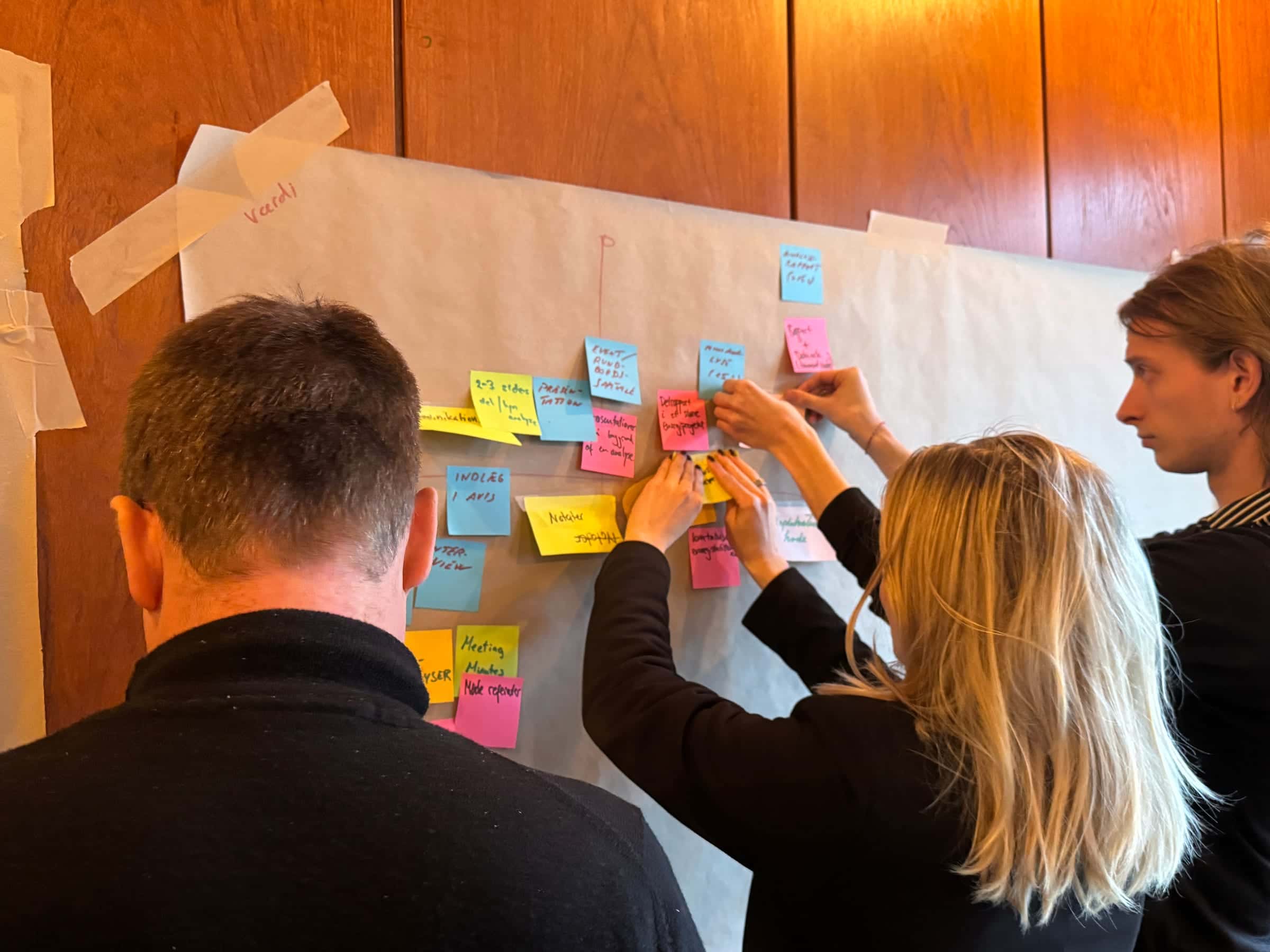
Simon at a wall covered in sticky notes during a Depth Check session, daylight from a tall window behind.
00The method · The three lenses

Before we recommend anything, we read your situation in three directions. Most material problems live where two or three of them meet — and most engagements that fail are ones that read only one.

Outside-in

the market view

Customers, lead generation, commercial structure, pricing, go-to-market, product strategy, new revenue, innovation. What the market sees, what it pays for, where growth comes from.

Inside-out

the operating view

SOPs, ways of working, organisational design, programme governance, transformation execution, change adoption. How decisions become activity, and how activity becomes outcomes.

Bottom-up

the foundation view

Data, architecture, AI, systems, product engineering, the technical platform. What the business actually rests on — and where its constraints are real, not narrated.

A pricing problem usually has an operating-model dimension. An AI initiative usually has a data-foundation dimension. A transformation programme usually has a commercial dimension nobody is reading. Three lenses, one room.

Your business

the situation in your boardroom

three perspectives, one room

SIMON LEADS

Outside-in

the market view

  • Customers and personas
  • Commercial structure and pricing
  • Go-to-market and growth
  • Product strategy and innovation
  • New revenue and productisation

SUNE LEADS

Inside-out

the operating view

  • Operating model and SOPs
  • Organisational design and roles
  • Programme governance
  • Transformation execution
  • Change adoption

LARS LEADS

Bottom-up

the foundation view

  • Data architecture and governance
  • AI and machine learning
  • Enterprise platforms and integration
  • Systems and product engineering
  • Compliance and regulatory architecture
Three brass arrows enter from upper-left, upper-right and below, converging on a navy-outlined card labelled Your business. Each arrow carries a lens: Outside-in, Inside-out, and Bottom-up.
The journey
01

Depth Check·1–2 days

Depth Check

A structured working session with the leadership team or board. We come in as the independent voice — no agenda other than understanding what is actually happening, no inheritance of internal politics. We apply the three lenses to read the situation. We ask the questions your organisation finds difficult. We listen for what isn't being said.

What happens

Working session with leadership. Three lenses applied live. Independent read, no political inheritance.

Inputs

The leadership team in the room. A short pre-read: brief context, the question on the table, a sense of what's been tried.

Outputs

A written summary of findings. Our honest read of the situation. A recommended next step — sometimes a structured analysis, sometimes implementation, sometimes the recommendation to do nothing yet and fix something else first.
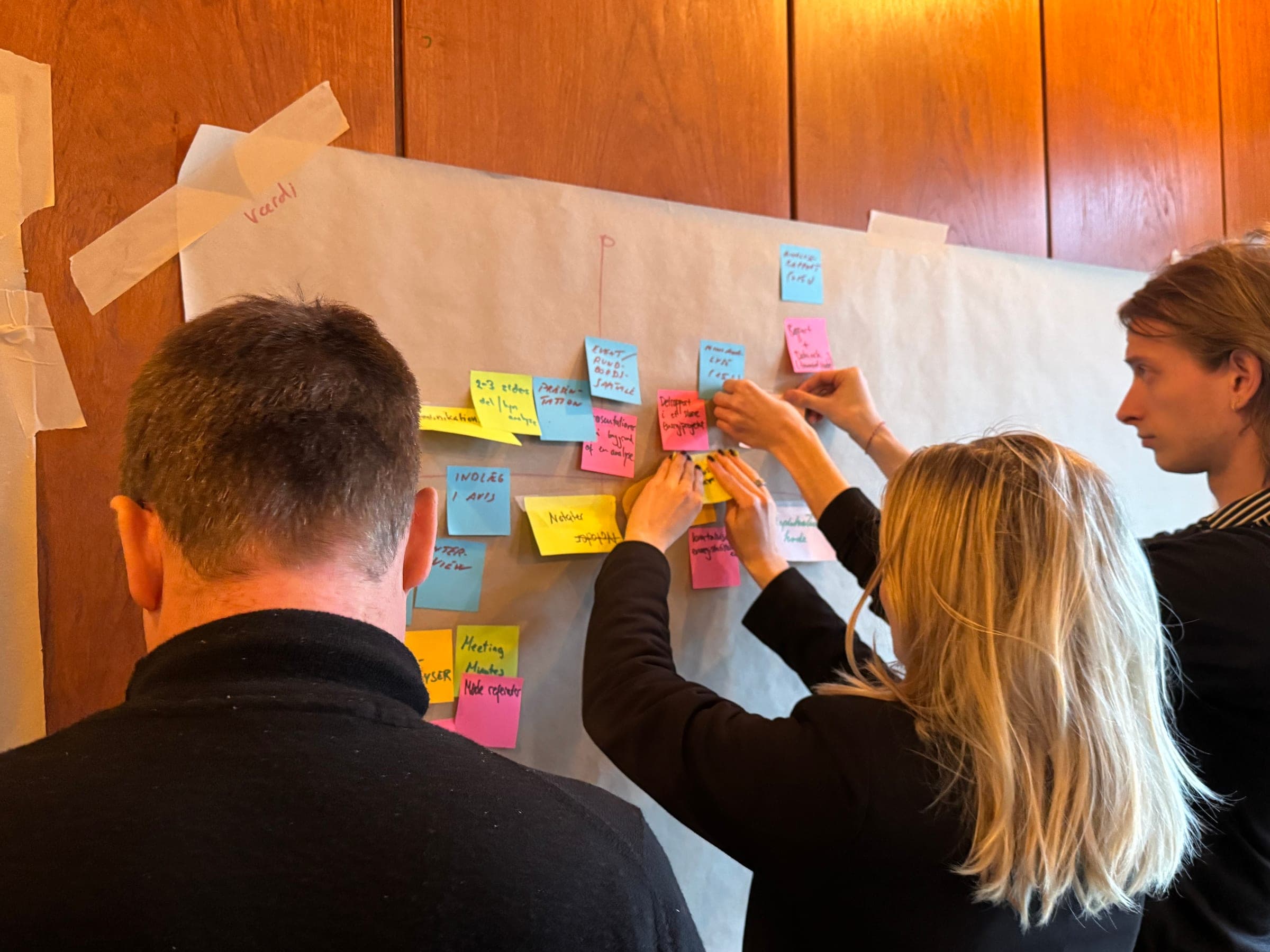
A wall covered in handwritten sticky notes, mapping out an operating model during a working session.Depth Check · in session
The room and the wall — operating model, in stickies, before any deck.
Next — Analysis
02

Analysis·2 to 6 weeks

Analysis

If the Depth Check surfaces a problem worth investigating in depth, we come back with a structured analysis — focused on a defined area: AI estate, data foundation, commercial structure, product portfolio, programme health. The three lenses go deeper, with access to systems, people, and data. We are most useful here for boards and CEOs who suspect they are being told one version of the story by their IT organisation and another by their commercial leadership, and need a third independent read to make a decision they can defend.

What happens

Defined-scope assessment. Three lenses go deeper. Access to systems, people, data.

Inputs

The Depth Check output. A defined assessment scope. Access to the relevant teams, systems, and data. Time.

Outputs

A written brief leadership can act on, not a deck. Independent assessment of the constraints we've found. A prioritised set of options — including the option to defer.

Next — Strategy
03

Strategy·decision gate

Strategy

This is the decision gate, and it sits with you. We present the findings, answer questions, and provide decision support. We name the trade-offs. We say what we would do in your seat. Leadership owns the call on what happens next.

If a 200-page strategy is needed for the avoidance of doubt, we will say so — but it will not be the deliverable. The output is short, dense, and structured around decisions: a clear narrative of where the business is today, a prioritised set of options, the recommended initial portfolio of moves, the metrics and guardrails leadership should be running against 90 days in.

What happens

Decision gate. Findings presented, trade-offs named, leadership owns the call.

Inputs

The analysis brief. The leadership team. Time to deliberate and pressure-test.

Outputs

A decision, owned by you. Execute — move to Stage 4. Park — defer or redirect with a clean handoff. Fix something else first — we say so plainly, even when it costs us the next stage of the engagement.

Next — Execution
04

Execution·scope-dependent

Execution

Implementation in our wheelhouse. What execution looks like depends on what the strategy calls for. We work hands-on — there is no junior delivery team handed the brief.

  • AI implementation — designed for adoption from the first sprint, not the last.
  • Data foundation work — sequenced honestly with the business outcomes that depend on it.
  • Commercial structure or product portfolio rebuild — through workshops, prototypes, and iteration with the people who will own the result.
  • Transformation programme oversight — formal governance, not bureaucracy.
  • Specialist deployment — named technical specialists from our network, accountable to us.

What happens

Hands-on implementation. AI, data, product, platform, programme oversight, specialist deployment.

Inputs

The strategy decision. Defined scope and outcome. Access. A sponsor who stays in the room.

Outputs

The built thing — and the organisation able to absorb and use it. Not declared done when software is done. Declared done when adoption has been achieved.

And then we stay through the 60 days that decide whether the investment paid for itself.

If you don't need a project

Some leadership teams don't need a build. They need a senior brain in recurring meetings — Monthly Advisor, Embedded Lead, Advisory Board seat, Board Director. Or they need a named specialist for a defined window. All available, all real, all separate from the journey above.